
There is a moment on Silverado Trail just after sunrise when Napa feels built for cyclists.
Fog rests low over the Rutherford benchlands. The eastern hills catch first light. Vineyard rows move past in steady rhythm as you roll north through Oakville. The air carries damp earth, eucalyptus, and the faint sweetness of ripening fruit if it is late summer.
By the time most visitors are scanning brunch menus in Yountville, you have already logged real miles.
If you plan your life around elevation profiles and thoughtful tables, Napa rewards both disciplines.
What This Experience Is Really About
Cycling in Napa is about balance.
It is about:
- Steady endurance miles along the valley floor
- Turning east and feeling the grade rise toward Howell Mountain
- Watching the lift of the morning fog near Carneros
- Earning your seat at a long lunch table
This valley has always been physical. Farmers rise early. Crews move through rows before heat settles in. Winemakers check fermentations at dawn.
Moving through Napa on a bike feels aligned with that agricultural rhythm.
The food simply completes the loop.
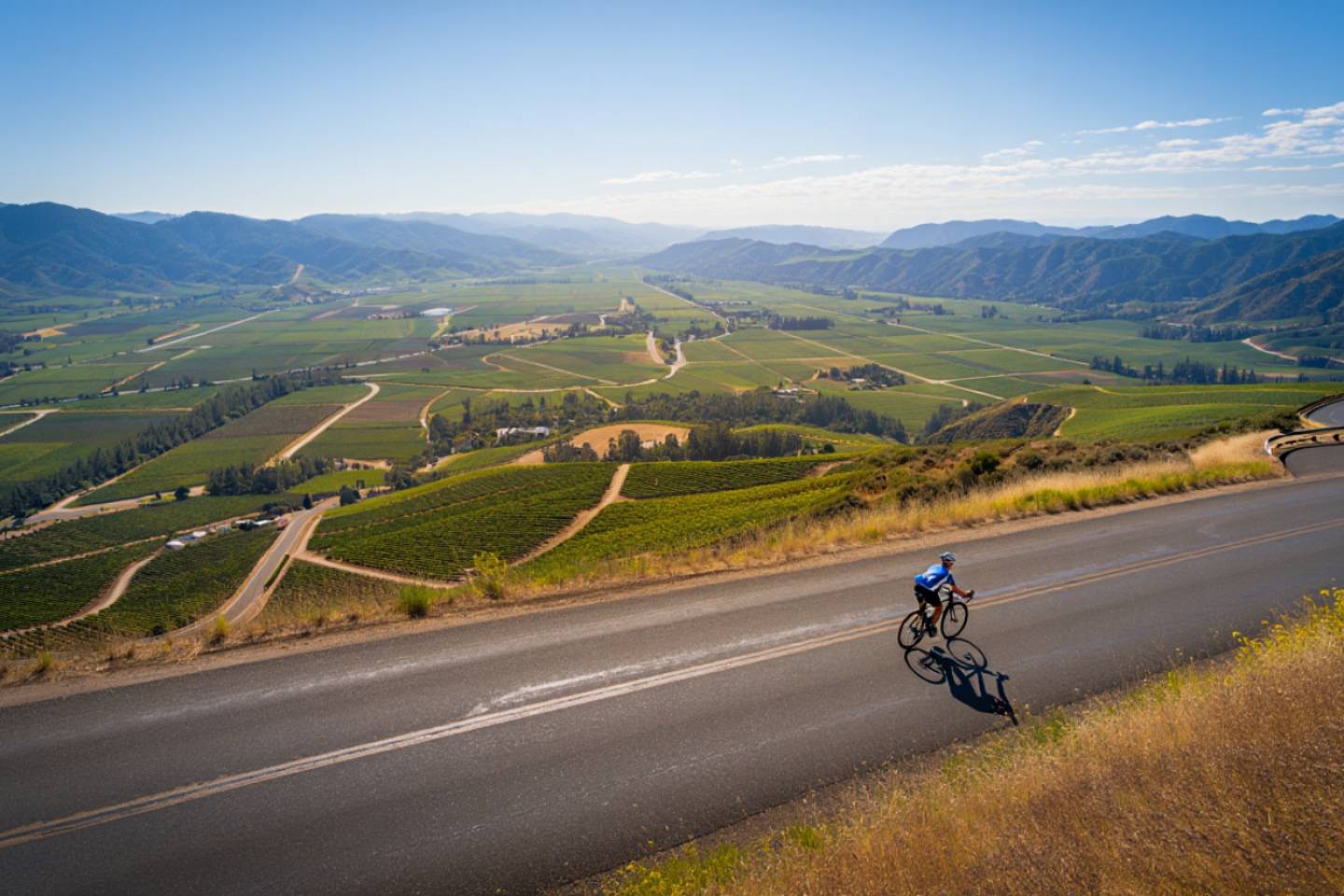
The Classic Ride: Silverado Trail
From the city of Napa north toward St. Helena and Calistoga, Silverado Trail runs like a training ribbon.
Wide shoulders. Rolling grades. Vineyard corridors through Oakville and Rutherford.
Start before 9 a.m. and you will experience what I call the slower, truer Napa midweek. Light is soft. Traffic is manageable. The benchlands feel almost private.
For strength work, turn east toward Howell Mountain. For sustained climbing, angle west toward Spring Mountain. For steady aerobic miles, hold pace along the valley floor and let cadence carry you past historic estates.
You can tailor the ride to your training goals without ever leaving wine country.
Scenic Detours Worth the Effort
If you want quieter loops, turn off near Yountville into vineyard roads that parallel the main corridor. Long sight lines of Cabernet rows stretching toward the Vaca range. Minimal interruption. Clean pavement.
Further north near Calistoga, terrain becomes more rugged. Less polished. The kind of roads that reward a steady climber and a patient mindset.
Cyclists planning a Napa weekend often anchor themselves in St. Helena. It offers central access to valley floor miles, mountain grades, and some of the region’s best restaurants.
[elementor-template id=”6068″]
Refuel the Right Way
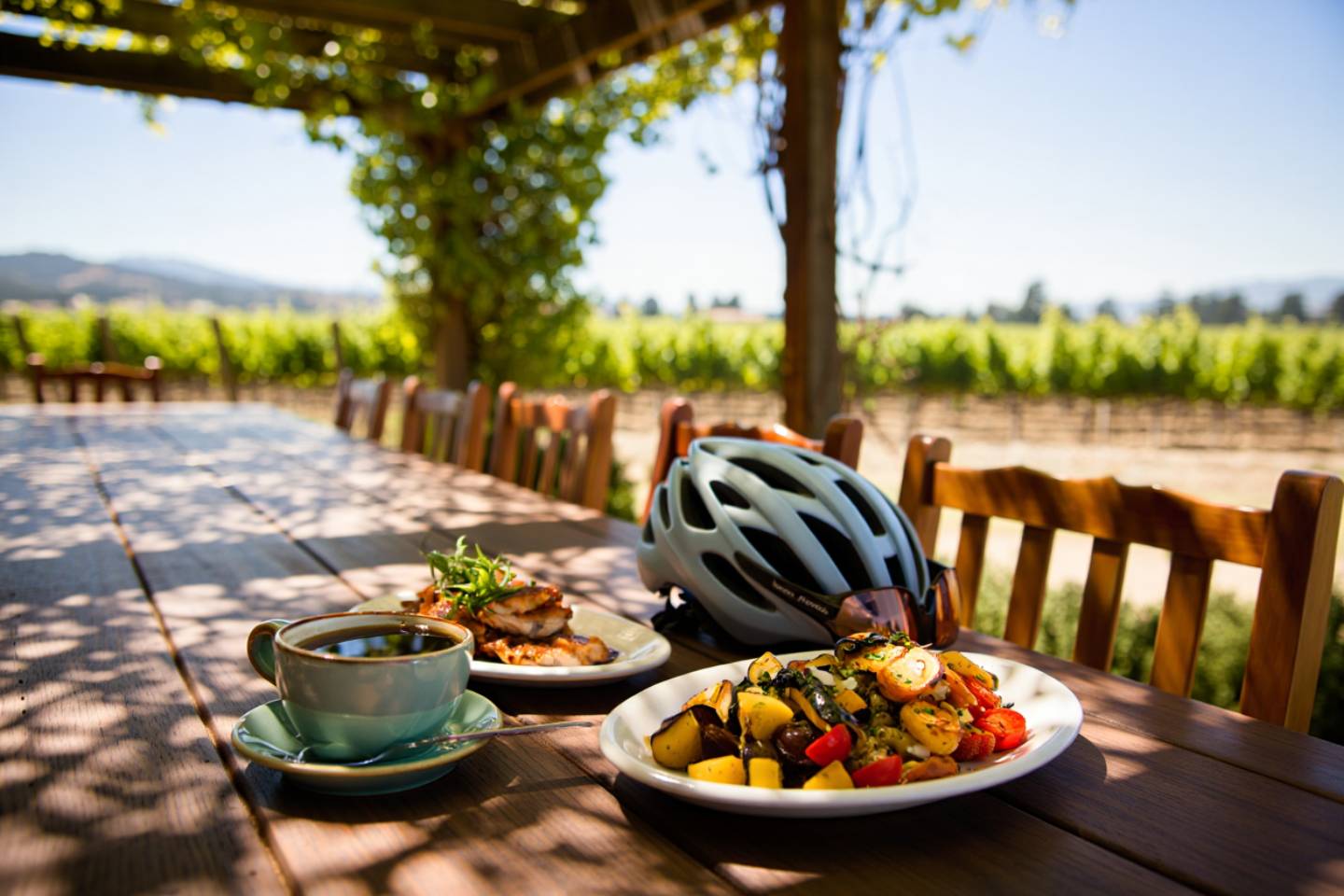
A great ride deserves a thoughtful table.
After morning miles, consider:
- Model Bakery for coffee and something warm before a 10 a.m. tasting
- Farmstead at Long Meadow Ranch for farm driven proteins and seasonal vegetables
- The Charter Oak for wood fired, ingredient forward plates
- Brix for vineyard views and balanced menus
Hydrate well. Eat real food. Then taste thoughtfully.
Napa’s farm to table culture supports cyclists better than many expect.
What Most Visitors Miss
Many cyclists ride early and leave before lunch.
They miss:
- The transition from effort to hospitality
- The way food tastes different after elevation work
- The subtle grade changes across the Rutherford benchlands
- The value of pacing
The secret to a great Napa cycling trip is structure.
Ride at sunrise. Schedule your first winery appointment at 10 a.m. Limit yourself to two tastings. Build in time for a real lunch.
Balance creates longevity, both on the bike and at the table.
My Local Notes
When we were shaping Estate 8, I used to ride early along Silverado Trail before hospitality meetings began. I would turn around just past Rutherford Cross Road and watch the fog lift off the front vineyard block.
One harvest morning, a crew was already moving through fruit at first light. The valley smelled like crushed Cabernet skins and damp soil. No music. No guests. Just work and rhythm.
I remember thinking that this is the Napa I never want to lose.
I will admit I am biased. Estate 8 is my baby. But the reason we built there had as much to do with how the land feels at sunrise as how the wine tastes at sunset.
Cycling lets you feel Napa before you ever sit down at a tasting table.
Sample Cycling and Food Itineraries
The One Day Power Loop
- Sunrise 25 to 35 mile ride along Silverado Trail
- Coffee at Model Bakery
- 10 a.m. seated tasting in Rutherford
- Lunch at Farmstead at Long Meadow Ranch
- Afternoon rest or short recovery spin
The Full Focus Weekend
- Early climb toward Howell Mountain
- 10 a.m. cave tour tasting with naturally cool 58 degree air
- Midday recovery in Calistoga
- Dinner at The Charter Oak or Brix
This pacing keeps the weekend grounded and sustainable.
Where to Stay for Easy Access
For central positioning and walkable dining, stay in St. Helena.
For flatter routes and quick access to Yountville restaurants, base yourself there.
For elevation and hot spring recovery, Calistoga is ideal.
Downtown Napa works well for access to the Vine Trail and riverfront paths.
Choose lodging based on terrain preference and dining plans, not just winery proximity.
Small Histories
Before Napa became a global luxury destination, it was agricultural labor.
Rows were walked daily. Barrels were moved by hand. Harvest began before sunrise.
Cycling through the valley feels less like a trend and more like a continuation of that physical tradition.